New Home Warranty in Texas: What the Law Requires
Discover essential details about the new home warranty in Texas. Learn about your rights and how to protect your investment effectively.
New Home Warranty in Texas: What the Law Requires

Texas new-home buyers automatically receive three tiers of statutory warranty protection under Texas Property Code Chapter 430: coverage for workmanship and materials for the first year, coverage for major systems like plumbing, electrical, and HVAC for the initial years, and extended coverage for major structural components for several years. The single most important action you can take to protect those rights is scheduling an independent inspection around month 11 and submitting any documented defects to your builder in writing before the one-year workmanship deadline closes.
What you receive automatically at closing:
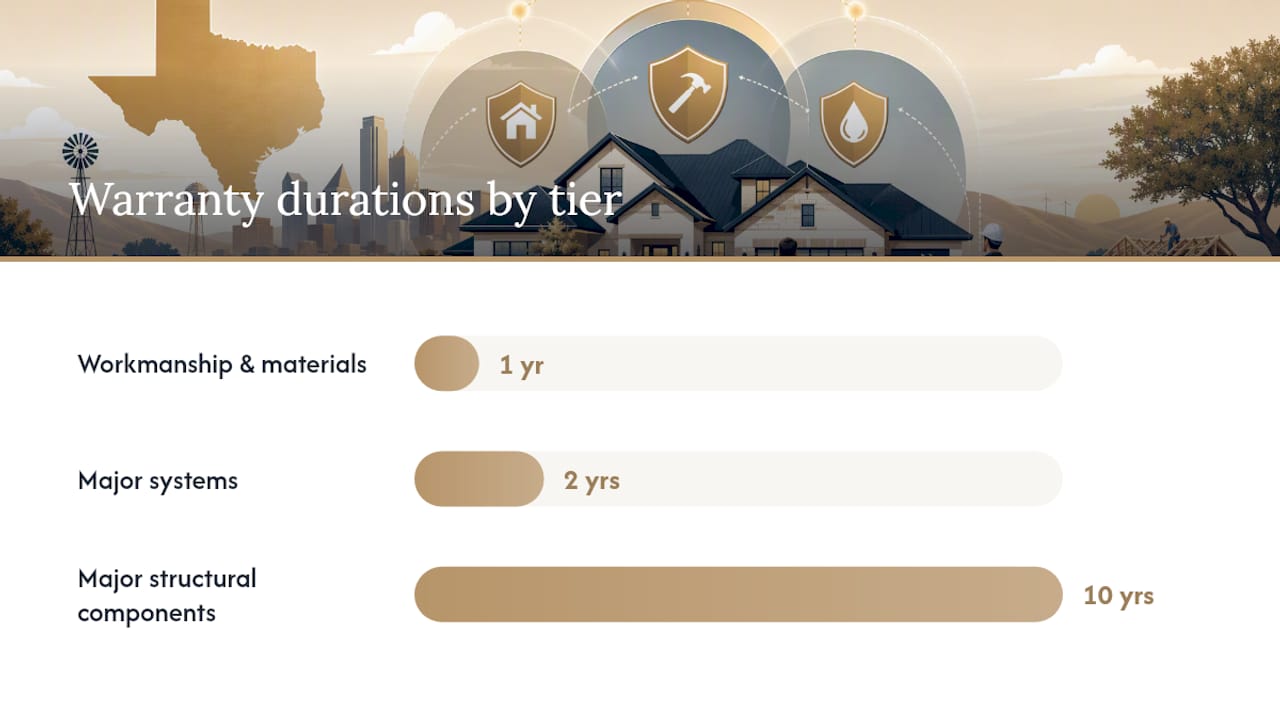
- 1 year — workmanship and materials (nail pops, drywall cracks, trim gaps, paint defects)
- 2 years — major systems: plumbing, electrical, HVAC delivery systems
- 10 years — major structural components (foundation, load-bearing framing, roof structure)
Three actions to protect your rights right now:
- Get the full warranty document in writing before you sign the purchase contract.
- Schedule a licensed independent inspector around month 11 of ownership.
- Submit every defect claim in writing with photos and a read receipt, never verbally.
Pro Tip: Set a calendar reminder for month 10 to book your inspector. Builders need time to respond and schedule repairs before the one-year window closes, and a verbal complaint you made at month 8 counts for nothing if it was never documented.
Third-party administrators like 2-10 Home Buyers Warranty often back the structural tier with insurance, which matters enormously if your builder goes out of business before year ten.
Key Takeaways
Texas new-home buyers receive three statutory warranty tiers under Property Code Chapter 430, and the 11-month inspection is the single most effective action to preserve workmanship claim rights before the one-year deadline.
| Point | Details |
|---|---|
| Statutory warranty tiers | Texas law requires 1 year workmanship, 2 years major systems, and 10 years structural coverage. |
| 11-month inspection | Schedule an independent inspection at month 10 to document defects before the one-year workmanship deadline. |
| Third-party structural backing | Confirm whether structural coverage is insured by an approved administrator like 2-10 before closing. |
| Transferability at resale | Structural warranties backed by third-party insurers are often transferable; confirm transfer fees and required notices in writing. |
| Mogavero Group | Reviews warranty language, coordinates inspections, and helps Austin buyers document claims before and after closing. |
Table of Contents
- What does Texas law actually require builders to provide?
- What builders typically cover under the 1-2-10 model
- How third-party warranty companies work and what to confirm
- How to file a warranty claim and what timelines to watch
- Builder warranty vs. paid home service contract: what’s the real difference?
- What warranties don’t cover and your maintenance responsibilities
- When do warranty periods start, and does coverage transfer when you sell?
- Pre-closing checklist: warranty questions to ask before you sign
- Is a paid home service contract worth buying in Texas?
- A perspective on using builder warranties as a negotiating tool
- Mogavero Group helps Austin buyers get warranty terms right
- Sources
- FAQ
What does Texas law actually require builders to provide?
Texas Property Code Chapter 430 sets the floor. Builders cannot contract around it, and any clause in a purchase agreement that tries to waive these statutory rights is unenforceable.
The three statutory warranty tiers
| Tier | Duration | What it covers |
|---|---|---|
| Workmanship and materials | 1 year | Defects in construction quality, materials, and finish work |
| Major systems | 2 years | Plumbing, electrical, and HVAC delivery systems |
| Major structural components | 10 years | Foundation, load-bearing walls, roof framing, and structural elements |
Warranty of habitability
Beyond the tiered periods, Chapter 430 includes a warranty of habitability. To be actionable, a defect must directly and adversely affect a habitable area of the home and must not have been discoverable by a reasonably prudent inspection at the time of purchase. That second condition matters: if a licensed inspector could have spotted the problem during a standard pre-closing walkthrough, the habitability warranty may not apply.
When the clock starts
Warranty periods begin on the earlier of occupancy or transfer of title to the initial homeowner. For improvements added after initial construction, the period begins on substantial completion of that improvement. If you close on a home but don’t move in for three months, the warranty clock likely started at closing, not move-in.
The commission’s rulemaking authority
The enrolled bill text for HB 730 records the commission’s authority to adopt rules implementing Chapter 430, including state-sponsored inspection and dispute resolution procedures, standards for statutory warranties, and approval criteria for third-party warranty companies. The Texas Residential Construction Commission (TRCC) that originally administered these rules was sunset in 2011. Today, warranty disputes that cannot be resolved directly with the builder typically escalate to civil court or arbitration, depending on the contract terms.
The statutory warranty is a legal floor, not a ceiling. Builders can offer more coverage than Chapter 430 requires, but they cannot offer less. Any contract language that reduces or eliminates these rights is void under Texas law.
What builders typically cover under the 1-2-10 model
The 1-2-10 new construction warranty Texas buyers encounter most often maps directly onto the three statutory tiers, though the administration of each tier differs in practice.
Year 1 — workmanship and materials. This is the tier you’ll use most. Common covered defects include:
- Nail pops and drywall cracks beyond normal settling
- Sticking or misaligned doors and windows
- Paint failures, trim gaps, and caulking separations
- Grout cracking in tile work
- Improper grading that causes water to drain toward the foundation
Years 1–2 — major systems. HVAC performance failures, plumbing leaks at joints or supply lines, electrical faults in panels or outlets, and ductwork that fails to deliver conditioned air to specified rooms all fall here. Builders typically administer this tier directly, sending their own subcontractors to assess and repair.
Years 3–10 — structural. Foundation movement beyond normal settling, major framing failures, load-bearing wall defects, and severe roof structural issues qualify. This is where administration shifts. Many builders enroll in an insured third-party program for structural coverage precisely because a structural claim can cost hundreds of thousands of dollars and because builders sometimes close or restructure before year ten arrives.
Pro Tip: Document the condition of every system at closing with dated photos and video. If an HVAC unit underperforms in year 18 months, you’ll want proof of its condition on day one, not just your memory of it.
How third-party warranty companies work and what to confirm
When a builder uses a third-party administrator for structural coverage, the legal relationship changes in ways buyers need to understand before closing.
Under Texas Property Code rules, a third-party warranty company may be approved if it has at least five years of operation in Texas, is insured by a Texas-authorized insurer, or qualifies as an insurance company itself. Approval is not a rubber stamp: the company must agree to perform the builder’s warranty obligations and actually pay for or correct covered defects, not just process paperwork.
2-10 Home Buyers Warranty is one of the most widely used administrators in Texas and markets the 1-2-10 coverage model with insurance-backed structural protection. In high-risk counties, particularly those with expansive clay soils, 2-10 may require soil testing or engineering review before issuing structural coverage. That step protects the insurer, but it also means your structural warranty is backed by an entity that has already assessed the site risk.
One important limitation: a third-party company cannot assume liability for personal injuries or damage to personal property. If a structural defect causes a ceiling to collapse and damages your furniture, the third-party warranty covers the structural repair. The personal property claim stays with the builder or your homeowner’s insurance.
Before closing, confirm these five items in writing: the name of the third-party administrator, the effective date of coverage transfer, the administrator’s claims contact information, whether structural coverage is insured, and whether the coverage transfers to a future buyer if you sell.
HOME of Texas is another approved provider that offers both 6-year HB-compliant plans and traditional 10-year structural options in Major Structural Defect (MSD) and Designated Structural Element (DSE) formats. The format matters because MSD and DSE define covered components differently, and a DSE policy may exclude certain foundation elements that an MSD policy covers.
Pro Tip: Ask your builder for the actual warranty book or policy PDF from the third-party administrator before you sign anything. A verbal description of “full structural coverage” is not the same as reading the exclusions section yourself.
How to file a warranty claim and what timelines to watch
Speed and documentation determine whether a warranty claim succeeds or stalls.
- Document everything at discovery. Take dated photos and video of the defect. For structural concerns, hire a licensed structural engineer or inspector to produce a written report. A builder’s warranty department will take a written engineering opinion far more seriously than a homeowner’s description.
- Submit the claim in writing. Use the builder’s warranty portal if one exists, and follow up with an email that has a read receipt enabled. For major items, send a certified letter to the builder’s registered address. Keep copies of every communication.
- Track the builder’s response window. Most builder warranty programs specify a response period (commonly 10–30 days for acknowledgment, longer for repair scheduling). Note these windows in your calendar and follow up in writing if they pass without action.
- Escalate through the contract’s dispute process. Since the TRCC sunset in 2011, most new-home contracts include mandatory arbitration or mediation clauses. Review your contract now, before a dispute arises, so you know which process applies and what filing fees look like.
- Consult a Texas construction attorney if the builder refuses. Homeowners retain the right to bring a civil cause of action after exhausting contractual remedies. Texas also has statutes governing contractor liability that may apply depending on the nature of the defect.
The FTC’s consumer guidance on new-home warranties reinforces that construction warranties and paid service contracts are different legal instruments, and that reading the actual warranty terms, not the builder’s sales summary, is the only reliable way to know what remedies you have.
The 11-month inspection is your most important deadline. Schedule it at month 10 so you have time to compile the inspector’s report, submit claims, and give the builder a reasonable window to respond before the one-year workmanship period expires. Realtor and practitioner commentary consistently identifies this window as the single most effective move to preserve remedy rights for visible workmanship issues.
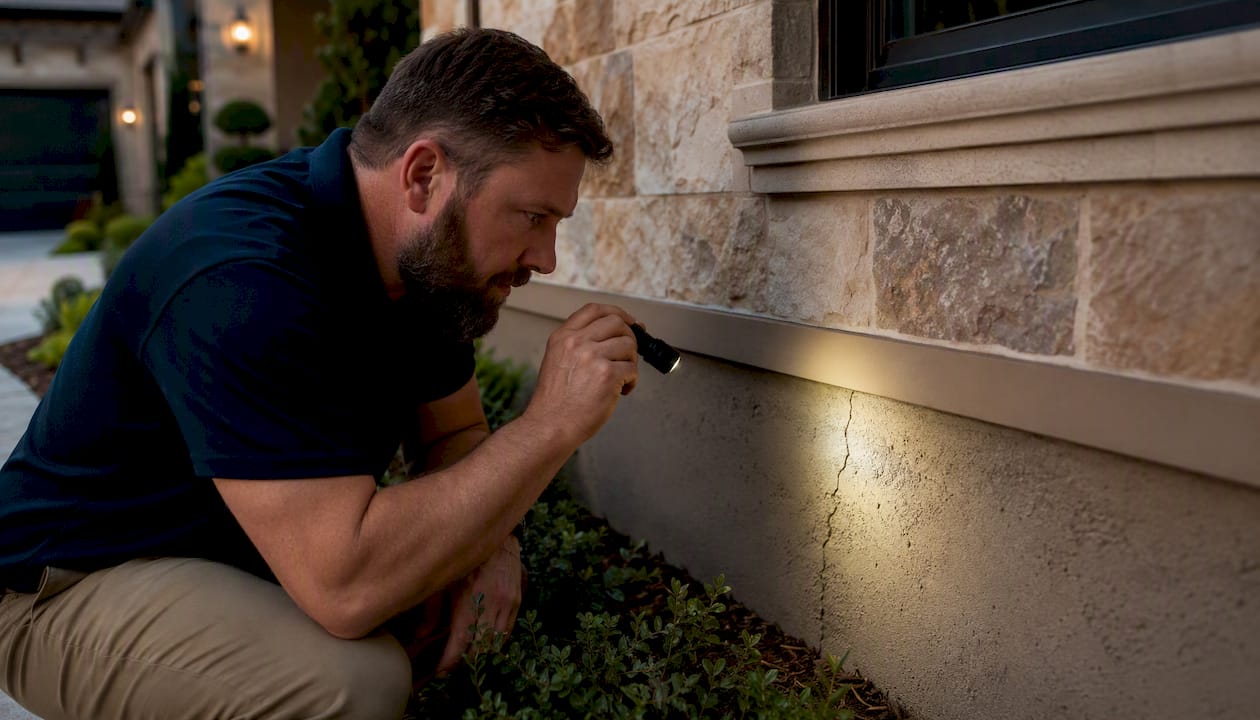
Pro Tip: Use a licensed home inspector who specializes in new construction, not a general inspector who primarily does resale homes. New construction defects require a different eye, and the report format matters when you submit it to the builder’s warranty department.
Builder warranty vs. paid home service contract: what’s the real difference?
These two products solve different problems, and confusing them is an expensive mistake.
A builder’s statutory warranty under Chapter 430 covers construction defects — things the builder did wrong or materials that failed because of how the home was built. A paid home service contract (often marketed as a “home warranty”) is a service agreement that covers mechanical failure of appliances and systems from normal wear and tear after the fact. The FTC is explicit that service contracts are not warranties in the legal sense; they are separate agreements with their own terms, exclusions, and cancellation rules.
| Dimension | Builder statutory warranty | Paid home service contract |
|---|---|---|
| Coverage period | 1, 2, or 10 years by tier | Typically 1 year, renewable |
| What’s covered | Construction defects, system installation failures | Mechanical breakdown from normal wear |
| What’s excluded | Normal wear, homeowner damage, appliances | Pre-existing conditions, code upgrades, cosmetic items |
| Transferability | Structural tier often transferable; confirm terms | Varies by provider; usually transferable for a fee |
| Claims process | Submit to builder or third-party administrator | Call provider; pay service fee per visit |
| Direct cost to buyer | None (included in purchase price) | Annual premium plus per-visit service fee |
When does a paid service contract make sense for a Texas new-home buyer? A few scenarios where it adds real value:
- Your appliances (refrigerator, washer, dryer) are not covered by the builder warranty and their manufacturer warranties are short.
- You’re buying in a market with high repair costs and want predictable monthly expenses.
- You plan to rent the property and want a single call-center solution for tenant repair requests.
- The statutory windows are closing and you want continued coverage for HVAC and plumbing systems.
Skip it if your builder’s structural coverage is insured and current, your appliances carry strong manufacturer warranties, and you have a cash reserve for occasional repairs. Paying an annual premium plus a service fee per visit for a system that’s still under builder warranty is redundant coverage.
Pro Tip: If you buy a paid service contract, compare the per-visit service fee (commonly $75–$150), annual caps on covered repairs, and whether the provider replaces or just repairs failed equipment. A contract with a $500 annual cap on HVAC repairs is nearly useless in Texas summers.
What warranties don’t cover and your maintenance responsibilities
Warranty coverage is not unconditional. Builders and third-party administrators routinely deny claims when the defect traces back to homeowner action or inaction.
Common exclusions across builder warranties:
- Cosmetic damage from normal use (minor scratches, scuffs, paint fading)
- Damage caused by homeowner neglect or improper modifications
- Pest damage (termites, rodents)
- Damage to personal property
- Improvements or additions not part of the original construction
- Routine maintenance items (caulking, weather stripping, filter replacement)
- Damage from extreme weather events not covered by the construction standard
Homeowner maintenance steps that preserve your coverage:
- Change HVAC filters on the manufacturer’s recommended schedule and keep receipts.
- Schedule annual HVAC maintenance with a licensed technician and document it.
- Control moisture: run exhaust fans, address minor leaks immediately, and keep gutters clear.
- Maintain proper grading and drainage away from the foundation — especially critical on North Texas clay soils, where expansive soil movement is a leading cause of foundation claims.
- Do not alter structural elements, remove walls, or modify load-bearing components without written consent from the builder or a licensed engineer.
Failing to follow manufacturer instructions for any system or appliance gives the builder or warranty company a documented basis to deny your claim. Keep a maintenance log from day one.
When do warranty periods start, and does coverage transfer when you sell?
The statutory clock starts on the earlier of occupancy or transfer of title to the initial homeowner. If you close in January but don’t occupy until March, your warranty periods likely began in January. For improvements added after initial construction, the period begins on substantial completion of that specific improvement.
Transferability varies by tier and administrator:
- The one-year workmanship and two-year systems tiers are typically not transferable because they’re tied to the original buyer’s relationship with the builder.
- The ten-year structural tier, when backed by a third-party insurer like 2-10, is often transferable to a subsequent buyer. Transfer terms, fees, and required notices vary by administrator.
Practical steps for sellers and buyers at resale:
- Check the warranty book for explicit transfer language before listing the home.
- Confirm any transfer fee with the third-party administrator (fees vary; confirm the current amount directly with the provider).
- Get transfer documentation in writing and include it in the closing package.
- Buyers purchasing a home still within its structural warranty period should request a copy of the original warranty book and confirm the transfer is properly executed at or before closing.
A transferable structural warranty is a genuine selling point. Buyers who know the foundation is covered for the remaining term of a 10-year policy will pay attention to that in a competitive market.
Pre-closing checklist: warranty questions to ask before you sign
Most warranty problems start with buyers who never read the warranty document before closing. Don’t be that buyer.
Confirm in writing before closing:
- The exact written warranty text, not a verbal summary from the sales agent
- Whether the contract includes any supplemental or enhanced warranty beyond the statutory minimum
- Who administers each tier (builder directly, or a named third-party administrator)
- Whether structural coverage is insured and by which company
- The claims contact information for each tier
- Transfer terms, fees, and required notice periods if you sell
- Any arbitration or mediation clause and the associated filing process
Three steps to take before closing day:
- Request the full warranty book or policy PDF from the builder and the third-party administrator at least two weeks before closing. Read the exclusions section first.
- Note the 11-month inspection deadline in your calendar the day you receive your closing date. Book a licensed Austin inspector now if you’re buying in the Austin area.
- Confirm that any verbal warranty promises from the sales team are reflected in the written contract. Under Texas law, written disclosure requirements apply, and verbal promises that contradict the written contract are generally unenforceable.
Pro Tip: Ask the builder’s sales agent: “Is the structural warranty insured, and by whom?” If they can’t answer that question on the spot, ask for the third-party administrator’s name and call the administrator directly before you sign.
Is a paid home service contract worth buying in Texas?
The honest answer depends on four variables: the age and brand of your appliances, your cash reserve, how long you plan to own the home, and whether your builder’s coverage already addresses your highest-risk systems.
The case for buying: If your appliances are builder-grade (not premium brands with long manufacturer warranties), your cash reserve is limited, or you’re buying an investment property where repair predictability matters more than total cost, a paid service contract can pay for itself in one or two major repair calls.
Scenarios where a paid contract makes sense:
- You’re at or near the end of the two-year systems warranty and want continued HVAC and plumbing coverage.
- You’re an investor or landlord who values a single point of contact for repairs.
- Your builder’s structural warranty is not insured and you want a backup layer of protection.
Scenarios where it probably doesn’t:
- Your appliances carry strong manufacturer warranties (five years or more).
- You have a solid cash reserve and are comfortable with occasional out-of-pocket repairs.
- Your builder’s structural coverage is insured by an approved third-party administrator.
The FTC’s guidance on warranties and service contracts advises reading the full contract terms before purchasing, with particular attention to what triggers a covered repair versus what the provider can decline as a pre-existing condition or maintenance failure.
Pro Tip: Compare at least two paid service contract providers on these four points: covered items list, annual repair cap per system, per-visit service fee, and average response time in your zip code. A low annual premium with a $500 HVAC cap is not a good deal in Central Texas.
A perspective on using builder warranties as a negotiating tool
Most buyers treat the builder warranty as a passive safety net, something they hope they never need. That’s the wrong frame. In my experience working with Austin buyers on pre-construction and off-market deals, the warranty document is one of the most negotiable elements of a new-home contract, and most buyers never ask a single question about it before signing.
Builders who use insured third-party structural administrators are making a statement about their confidence in the construction. Builders who self-administer all three tiers, with no third-party backing, are asking you to trust that they’ll still be in business and financially solvent in year eight when a foundation issue surfaces. That’s a meaningful difference, and it’s worth asking about directly.
The 11-month inspection isn’t just a warranty tactic. It’s a negotiating moment. A well-documented inspector’s report submitted at month 11 gives you leverage to get repairs done properly, not just patched. Builders who know a buyer has professional documentation are far more responsive than those dealing with a verbal complaint.
At Mogavero Group, we review warranty language before contract signing, coordinate independent inspections, and help buyers document and submit claims correctly. If you’re buying new construction in Austin, those steps are part of the service, not an add-on.
Mogavero Group helps Austin buyers get warranty terms right
Buying new construction in Austin means navigating builder contracts, warranty tiers, and third-party administrators before you ever move in. Mogavero Group reviews warranty language before you sign, coordinates licensed inspectors for pre-drywall and 11-month inspections, and helps you document and submit claims in a format builders take seriously.

Mike Mogavero and the team have spent over 20 years working with Austin pre-construction and off-market buyers, which means they’ve seen what happens when warranty terms are vague and what happens when they’re airtight. The difference usually comes down to what was confirmed in writing before closing, not what the sales agent said in the model home.
If you’re buying new construction in Austin and want a team that treats warranty review as part of the transaction, not an afterthought, browse available Austin properties or reach out directly to schedule a consultation.
Sources
Primary references for readers who want to verify the statutes, commission rules, and provider terms directly:
- Texas Property Code Chapter 430 — Warranties and building and performance standards
- 78® HB 730 - Enrolled version - Bill Text
- Consumer
- Texas Builder Warranties & Coverage Plans | 2-10 HBW
- NEW HOME WARRANTIES (HOME of Texas warranty flyer)
How to use these sources: Start with Chapter 430 sections 430.001–430.011 for the statutory baseline. Then request the warranty book PDF from your builder’s administrator (2-10, HOME of Texas, or another approved provider) and compare the exclusions section against what the sales team told you verbally.
This article is general information, not a substitute for advice from a qualified lawyer. Consult a qualified legal professional about your own circumstances before acting on anything here.
FAQ
How long does a builder have to warranty a house in Texas?
Under Texas Property Code Chapter 430, builders must provide one year for workmanship and materials, two years for major systems, and ten years for major structural components. These periods begin on the earlier of occupancy or transfer of title to the initial homeowner.
Is a home warranty worth it in Texas?
A paid home service contract adds value when your appliances lack strong manufacturer warranties, your cash reserve is limited, or you’re approaching the end of the statutory systems warranty period. For buyers with insured third-party structural coverage and solid appliance warranties, the overlap often makes a paid contract redundant.
What is the best home warranty plan in Texas?
The most protective coverage for new construction combines the statutory builder warranty under Chapter 430 with an insured third-party structural administrator. Among third-party administrators, 2-10 Home Buyers Warranty and HOME of Texas are two widely used approved providers that offer insured structural coverage with transferability options.
What does Dave Ramsey say about home warranties?
Dave Ramsey generally advises against paid home service contracts, arguing that the annual premiums and per-visit fees often exceed the actual repair costs over time and that a dedicated savings fund is a better use of the money. That view applies most directly to resale homes with aging systems; for new construction, the statutory builder warranty already covers the highest-risk period.
What happens to my warranty if I sell the home before year ten?
The one-year and two-year tiers are typically not transferable. The ten-year structural tier, when backed by an insured third-party administrator, is often transferable to the next buyer. Confirm the transfer terms, any required fees, and the notice process with the administrator before listing the home, and include transfer documentation in the closing package.
Recommended
- Top Home Inspection Services Austin 2026 | Mogavero Group Austin Real Estate
- Must-have amenities in Austin homes for 2026 buyers | Mogavero Group Austin Real Estate
- Master the Home Buying Process Workflow in Austin | Mogavero Group Austin Real Estate
- What Austin Luxury Home Buyers Want in 2026: Architectural Styles, Tech, and Outdoor Living | Mogavero Group Austin Real Estate