7 Day Open House Prep for Austin 2026: Turn Traffic Into a Pipeline
Treat every Austin open house as a weeklong lead campaign. Run a neighbor preview, follow a 7 Day pre event plan, then use a 24 to 48 hour follow-up to...
7 Day Open House Prep for Austin 2026: Turn Traffic Into a Pipeline
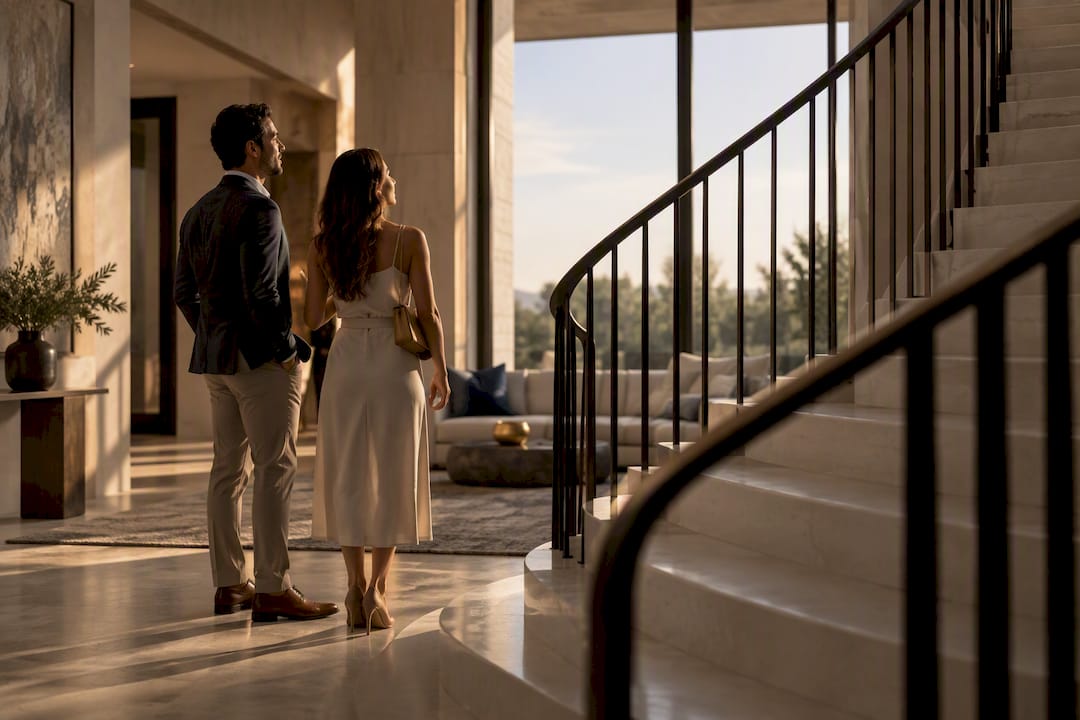
Treat every Austin open house as a targeted marketing campaign, not a two-hour obligation. Invite neighbors first, run a tightly timed public window on Sunday early afternoon, and follow up within 24 to 48 hours. Most Austin open houses won’t close the sale on the spot. They build the pipeline of neighbors, future sellers, and buyers that closes the next three or four sales down the line.
TL;DR:
- Hosting neighbor-only hours before the public open house significantly increases the chances of generating future listings and referrals in Austin’s competitive market.
- A seven-day marketing plan with targeted social media boosts, signage, door-to-door outreach, and staging maximizes open house traffic and visitor engagement.
- First impressions matter most, so focus on curb appeal, lighting, and scent to ensure buyers have a positive initial reaction within seconds of arrival.
- Structured follow-up within 24 to 48 hours transforms open house foot traffic into meaningful leads, with segmentation guiding subsequent outreach efforts.
- Incorporating virtual or hybrid tours extends reach to out-of-state buyers and investors, but virtual attendees require longer nurturing before scheduling in-person visits.
Table of Contents
- Why Open Houses Still Matter in Austin’s 2026 Market
- When Should You Schedule an Austin Open House?
- The 7-Day Pre-Open-House Marketing Checklist
- Staging Priorities: Curb, Light, and Scent
- Greeting Scripts and Visitor Sign-In That Actually Work
- Safety and Privacy Steps Every Host Should Follow
- The 24 to 48 Hour Follow-Up Sequence That Converts
- Mogavero Group’s Take on Adapting This Playbook for Luxury Listings
- Legal Considerations for Hosting an Austin Open House
- Virtual and Hybrid Open House Strategies for Austin Sellers
- How to Differentiate Your Open House in a Crowded Austin Market
- The Real Opportunity Most Agents Miss
- Consider a full-service approach for running your Austin open house campaign
- Sources
- FAQ
Why Open Houses Still Matter in Austin’s 2026 Market
An open house rarely sells the house it’s held for. What it does is put a listing agent in front of dozens of people who live nearby, know someone selling, or are quietly shopping before they’ve told their agent. That’s the actual return on the two hours, and it’s why treating the event as a lead system rather than a single showing changes the math entirely.
Open houses earn their place when a property has broad appeal, sits in a walkable or amenity-rich pocket, or when the seller wants market feedback fast. They matter less for highly specialized homes or listings already generating strong private showing traffic. A repeatable, neighborhood-focused open house system built around neighbor invitations and structured follow-up consistently outperforms a one-off Sunday event. Consider what actually drives the traffic that matters:
- Curious neighbors who become future listing sources or referral engines
- Buyers who haven’t committed to an agent yet and walk in cold
- Renters testing whether they can afford to buy in that specific pocket
- Investors scouting comparable inventory before making an offer elsewhere
When Should You Schedule an Austin Open House?
Sunday between 1 and 4 PM remains the strongest window for most Austin neighborhoods, and local market write-ups on Austin-specific open house timing back that pattern for 2026. Weekend afternoons catch people after brunch and before evening plans, when browsing a nearby listing feels low-commitment.
The higher-leverage move happens before the public even shows up.
- Run a private neighbor hour from noon to 1 PM, before the doors technically open
- Reserve the 1 to 4 PM window for general public traffic and drop-ins
- Hold a second open house the following weekend only if traffic or sign-ins from week one justify it
- Convert to private showings by appointment once two consecutive weekends produce thin sign-in sheets
- Treat a third open house as a signal to revisit pricing rather than just repeating the format
Skipping the neighbor hour is the single most common mistake agents make in this market, and it’s the easiest one to fix.
The 7-Day Pre-Open-House Marketing Checklist
An open house that gets promoted for two days performs worse than one built on a real seven-day runway. Signage and a listing update on the day of showing up almost never produces meaningful traffic. The open house playbook built around signage, QR codes, and a marketing timeline treats the week before the event as the campaign, not the two hours during it.
- Day 7: Update the MLS listing with fresh photos, create a Facebook Event, and draft the Instagram Stories sequence.
- Day 5: Launch a targeted paid boost on social platforms aimed at the immediate zip code and adjacent neighborhoods.
- Day 4: Order or print directional signage and finalize a QR code that routes to a mobile landing page with photos and disclosures.
- Day 3: Print flyers or a one-pager with price, square footage, school zone, and a QR code repeated for anyone who skips the digital version.
- Day 2: Begin door-knocking or leaving door hangers at 50 to 100 nearby homes, inviting neighbors to the private preview hour.
- Day 1: Confirm signage placement routes, walk the block for visibility issues, and stage the interior.
- Day of: Place signs early, run the neighbor hour, then open to the public.
Pro Tip: Door-knocking works better as an invitation than a pitch. Say “I wanted you to see it before anyone else does” instead of “Are you interested in buying?”
Staging Priorities: Curb, Light, and Scent
Buyers decide how they feel about a house within seconds of the front door opening, and Austin’s humidity and pollen season make sensory staging non-negotiable in spring and early summer. Focus energy on the details that shape first impressions rather than trying to perfect every room.
- Refresh mulch, trim overgrowth, and add a clean doormat and potted plants at the entry
- Open blinds and turn on every light, even during the day, to eliminate shadowed corners
- Declutter counters and closets so the primary bedroom and kitchen photograph and feel larger
- Set the thermostat to a comfortable range well before doors open, not right as the first car pulls up
- Remove strong candles or air fresheners; a lightly scented, unscented, or fresh-baked aroma reads as authentic where perfume reads as covering something up
- Contain pets off-site or in a closed-off area with food, water, and a note on the door
Greeting Scripts and Visitor Sign-In That Actually Work
The first ten seconds at the door decide whether a visitor gives you real information or a fake email address. Greeting warmly and asking a low-pressure question beats a hard sales pitch every time, and the step-by-step open house lead system built around this exact approach is why baker-style greetings work: you’re offering something, not extracting something.
- Greet like you’re handing over a fresh loaf of bread, not scanning for a lead: “Welcome, come on in, let me know if you have questions.”
- For neighbors specifically, say “I wanted you to see this before the public opening” rather than asking for contact details up front.
- Keep the sign-in sheet to five fields: name, email or phone, how close they live to the property, one buying or selling timeline field, and a checkbox for permission to send updates.
- Ask “How far do you live from here?” early. A same-street answer signals a neighbor lead; a different-zip-code answer signals a relocation or investor prospect.
- Ask “Are you actively looking, or just exploring the neighborhood?” Active answers get a same-week callback; exploring answers get added to a drip sequence.
- Ask “Do you have a property to sell first?” A yes here is often the most valuable lead in the room, even if they never buy this house.
Pro Tip: The proximity question isn’t small talk. It’s the single fastest way to sort a “just looking” neighbor from a serious future listing.
Safety and Privacy Steps Every Host Should Follow
Open houses put strangers inside someone’s home for hours at a stretch, which means safety planning isn’t optional even in a low-crime pocket of Austin. Texas licensees also carry disclosure and conduct duties that TREC’s consumer notice guidance spells out, and good hosting practice overlaps heavily with those obligations.
- Remove or lock away jewelry, prescription medications, firearms, cash, and small valuables before the first visitor arrives
- Store passports, checkbooks, and personal documents out of sight, not just out of reach
- Staff at least two people for any listing expecting double-digit visitors: one greeting at the door, one circulating through rooms
- Position yourself so you can see the front door and main hallway from most rooms in the house
- Keep visitor sign-in data private. Never post names, addresses, or timelines publicly, and store the list in a secured CRM rather than a loose paper sheet
The 24 to 48 Hour Follow-Up Sequence That Converts
Most of the value from an open house gets thrown away in the follow-up, or rather, the lack of one. A tight framework built around delivering what you promised, adding one extra piece of value, and segmenting leads by heat is where most open-house campaigns actually earn their return, not during the two hours of foot traffic.
- Within 24 hours: Send a thank-you email or text that delivers anything you promised (school ratings, HOA details) plus one bonus item, like a quick market report for that street.
- Within 48 hours: Segment every sign-in into hot (actively looking, ready to tour again), warm (exploring, needs nurture), or neighbor (potential future listing).
- Days 3 to 14: Call hot leads directly to book a second showing; add warm leads to an email or text drip; invite neighbor leads to a private valuation conversation.
- Days 15 to 90: Maintain a monthly touch, a market update, a comp report, or a “just sold nearby” note, and track sign-ins against how many convert to appointments and eventually listings.
Agents who treat this as a formal drip rather than a one-time email tend to see meaningfully more of their sign-in sheet convert into either a showing or a future listing appointment over the following quarter. Reviewing structured lead-nurturing cadences can help formalize what that 90-day sequence should look like in practice.
Mogavero Group’s Take on Adapting This Playbook for Luxury Listings
Luxury and off-market Austin properties change the math, but not the fundamentals. Neighbor-first invitations still matter, they just take the shape of a private preview evening rather than a casual walk-through hour, often timed around a specific architectural feature or view. Staging leans harder on the property’s design story: material choices, sightlines, and the build quality that a standard open house rarely gets to showcase.
Mogavero Group applies the same lead-capture discipline to these events, just with tighter guest lists and more curated marketing touches, from private previews tied to architectural marketing to invitation-only walkthroughs for qualified buyers ahead of any public listing. The mechanics don’t change. The audience and the presentation do.
Legal Considerations for Hosting an Austin Open House
Texas doesn’t require a special permit to hold a residential open house, but several disclosure and conduct rules still apply, and they matter more than most agents treat them. TREC’s consumer notice requirements require licensees to provide the Information About Brokerage Services notice to buyers at first substantive contact in most transaction types, and an open house visitor asking detailed questions can trigger that obligation.
Sellers must also comply with Texas’s Seller’s Disclosure Notice requirements before closing, and hosts should have that document accessible or referenced during showings rather than treating disclosure as a later-stage paperwork step. Anyone unsure about a specific scenario should verify current requirements directly through the Texas Real Estate Commission, since forms and thresholds get updated periodically.
A few practical items reduce legal exposure beyond disclosure paperwork. HOA-governed communities sometimes restrict signage placement, size, or duration, so checking the HOA’s sign policy before ordering directional signs avoids a fine or a removed sign on showing day. Fair housing rules apply at every open house the same way they apply to any other showing: hosts can’t steer conversations toward or away from a buyer based on protected characteristics, and casual comments about “who lives in this neighborhood” cross that line faster than agents expect. Liability coverage matters too. Most homeowner policies cover general visitor injury, but a seller hosting a large public event should confirm coverage with their insurer rather than assume standard homeowner’s insurance handles it automatically. None of this requires a permit application. It requires knowing which existing rules apply to a public-facing event inside a private residence.
Virtual and Hybrid Open House Strategies for Austin Sellers
A livestream walkthrough extends an Austin listing’s reach well past whoever can physically show up on a Sunday afternoon, and that matters most for out-of-state buyers, relocating families, and investors who make up a meaningful share of Austin’s buyer pool. The strongest hybrid format runs a live video tour during the same window as the in-person event, using a phone gimbal or a simple stabilized camera rather than expensive equipment.
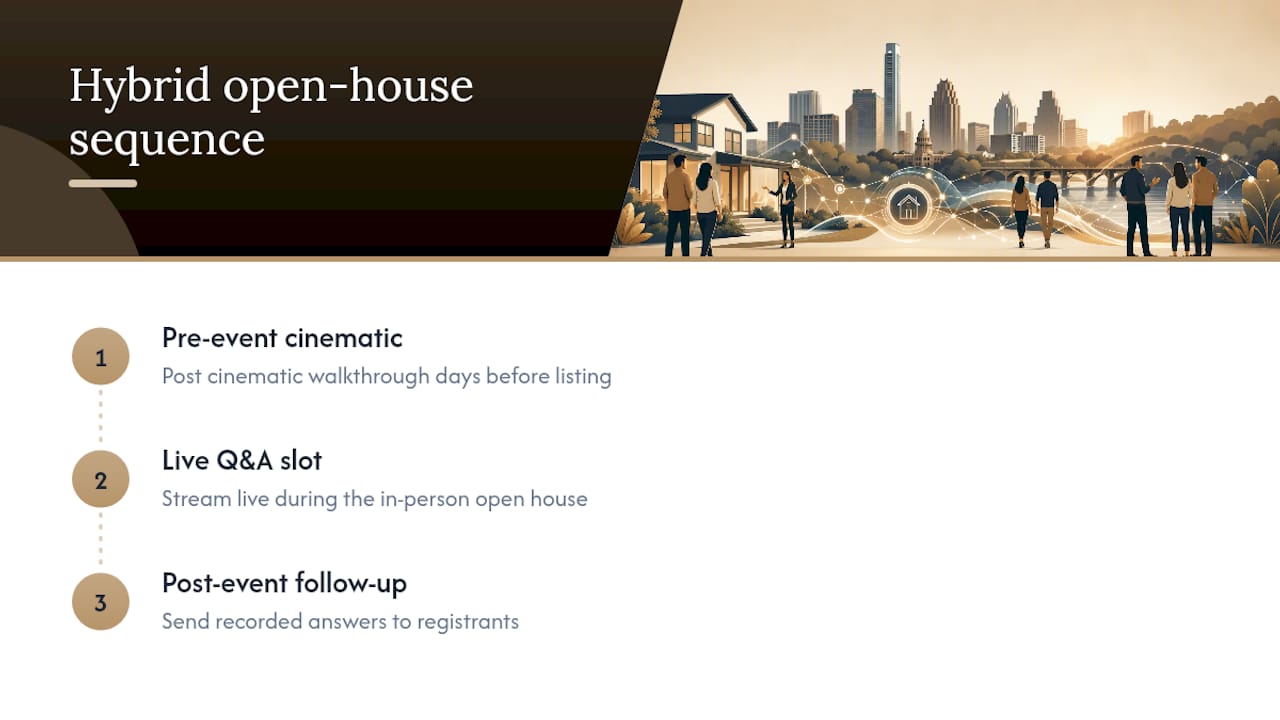
Structure the virtual component around three pieces: a pre-recorded cinematic walkthrough posted to the listing and social channels a few days before the event, a live Q&A or video call slot during the actual open house window for serious remote buyers, and a follow-up video answering questions that came up live, sent to anyone who registered but couldn’t attend in real time.
Hybrid formats work especially well for pre-construction and off-market listings, where showing a floor plan or a build progress update matters more than walking empty rooms. A short narrated video covering finishes, lot orientation, and builder details often converts better than a static listing photo set for buyers evaluating a property from out of state.

The practical limit: virtual attendees rarely convert as fast as in-person visitors, so treat them as a slower-moving segment in the follow-up sequence rather than folding them into the same 24-hour hot-lead call list. A remote buyer touring by video needs more nurture time before booking a flight to see the property in person, and building that expectation into the follow-up cadence prevents wasted urgency on leads that were never going to move that fast.
How to Differentiate Your Open House in a Crowded Austin Market
Austin runs a high volume of weekend open houses, especially in growth corridors like East Austin, Mueller, and the northern suburbs, which means a generic sign-and-wait approach gets lost in the noise. Differentiation comes from specificity, not gimmicks.
Lead with a detail competitors skip: a builder’s story, an architect’s name, a specific view, or a walkability score tied to a named destination nearby. Generic listings say “close to downtown.” A differentiated one says “an eight-minute walk to a specific named coffee shop and greenbelt trailhead,” because specificity signals a host who actually knows the property rather than reading off a script.
Timing differentiation matters too. If every other listing on the block runs the standard Sunday 1 to 4 PM slot, a Saturday morning coffee-and-walkthrough format, or a Friday evening golden-hour showing, can capture buyers who’ve grown fatigued touring five houses back to back on a Sunday.
The strongest differentiator, though, is what happens after the open house ends. Most agents send one generic follow-up email. A host who delivers a promised comp report, answers a specific school-zone question with real data, or invites a promising neighbor lead to a private valuation conversation stands out simply by doing what almost nobody else bothers to finish. In a market with dozens of open houses competing for the same Sunday afternoon, follow-up discipline is often the entire competitive edge.
The Real Opportunity Most Agents Miss
Most agents treat the open house as the event and the follow-up as an afterthought. That’s backward. The two hours of foot traffic are the cheapest, easiest part of the whole exercise. The neighbor invitations beforehand and the structured follow-up afterward are where actual pipeline gets built, and they’re the two steps most likely to get skipped when an agent is busy.
The conventional advice tells you to stage the home and show up with flyers. That’s necessary but not sufficient. What the data on neighbor-first invitations and structured follow-up sequences actually shows is that the event itself is almost a formality, a scheduled excuse to get fifty nearby households talking about the listing before a single public visitor walks in. Skip the neighbor hour and you’ve thrown away the highest-return hour of the entire campaign.
For luxury and off-market Austin listings, the stakes for getting this sequencing right go up, not down. A curated preview for the right ten households can generate more real interest than a hundred casual Sunday walk-throughs, provided the invitation, the staging, and the follow-up all treat the event as a campaign rather than a courtesy.
— Mike
Consider a full-service approach for running your Austin open house campaign
Running the full sequence, neighbor invitations, staged photography, signage, sign-in tracking, and a real 90-day follow-up cadence, takes more hours than most sellers have to give a single Sunday event. A comprehensive open house campaign treats the event as one piece of a coordinated seller strategy, backed by architectural insight for staging and precision marketing suited to luxury and off-market segments.
Through Seller Representation, the team plans the pre-event marketing timeline, staffs the event, and runs the follow-up sequence so no lead sits untouched for a week. Sellers with unique or high-value properties can also explore Private Listing Access for a curated preview strategy instead of a public open house. If you’re ready to see what a fully managed campaign looks like for your address, request a consultation and get a tailored open-house plan built around your specific neighborhood and timeline.
Sources
- TREC — CN 1-5 (Consumer Notice and related forms)
- The step-by-step open house lead system that fills your pipeline — Inman (2026)
- The ultimate open house checklist — HousingWire
FAQ
Is Selling Your Home to Opendoor Worth It in Austin?
Selling to an instant-offer company like Opendoor trades speed and certainty for a lower net price, since these buyers typically discount for their own resale risk and repair costs. An open house campaign paired with traditional seller representation usually nets more money over a similar or only slightly longer timeline, especially in desirable Austin neighborhoods where buyer demand supports competitive offers.
What Is the 3-3-3 Rule in Real Estate?
The 3-3-3 rule is a home-buying guideline suggesting spending no more than three times your annual income on a home, keeping a down payment plus closing costs to three months of expenses in reserve, and limiting your monthly housing payment to roughly 33 percent of gross income. It’s a budgeting framework buyers use before touring, not a rule tied specifically to open houses.
Is $100,000 a Good Salary in Austin?
A salary at a comfortable market level supports a lifestyle in Austin for a single person or a couple without dependents, though it stretches further in suburban areas than in high-demand central neighborhoods where home prices run higher. Buyers at this income level often shop the outer submarkets or condo inventory where open houses draw a more budget-conscious, first-time-buyer crowd.
Where Does Matthew McConaughey Live in Austin?
Matthew McConaughey has been publicly associated with Austin for years and has spoken about his ties to the city, though his exact residential address isn’t publicly listed and shouldn’t be treated as public information. Celebrity ties to Austin neighborhoods often boost general interest in specific pockets of the city, which can indirectly raise open house foot traffic in those areas.
How Often Should I Hold an Open House on the Same Listing?
Most Austin listings benefit from one strong open house in the first two weekends of the listing, with a second only if sign-in numbers or feedback justify it. Beyond two consecutive weekends with thin traffic, a price or marketing adjustment usually outperforms simply repeating the same event.