Living in Steiner Ranch: 30–45 Minute Commute, Lake Access & Schools
This guide to living in Steiner Ranch gives agent-backed advice on lake access, HOA amenities, Leander ISD zoning, home prices, and the 30–45 minute...
Living in Steiner Ranch: 30–45 Minute Commute, Lake Access & Schools

Steiner Ranch works best for families and outdoor-oriented buyers who want resort-style amenities, strong schools, and a hill country setting close to Lake Austin. The main tradeoff is cost and distance: home prices sit well above the Austin median, and the commute downtown can run 30 to 45 minutes depending on traffic. If you want space, water access, and a Leander ISD address, it delivers. If you need a short commute or a lower price point, look elsewhere.
TL;DR:
- Homes near the lake and in the most desirable sections tend to sell quickly, often before they are listed publicly, so private access is crucial.
- Schools are within the Leander ISD, but exact attendance zones should be verified due to ongoing boundary adjustments.
- Latest crime data should be checked for specific streets, although Steiner Ranch has a reputation as a lower-crime, family-friendly community.
Table of Contents
- What Is It Like Living in Steiner Ranch?
- What Amenities Does Steiner Ranch Offer Residents?
- Which Schools Serve Steiner Ranch Families?
- What Do Homes Cost in Steiner Ranch?
- How Long Is the Commute From Steiner Ranch to Austin?
- What Is Daily Life Like in Steiner Ranch?
- How Safe Is Steiner Ranch?
- What Healthcare Options Are Near Steiner Ranch?
- Where Do Residents Shop, Eat, and Spend Free Time?
- Is There Public Transit Beyond the Commute to Downtown?
- How Did Steiner Ranch Develop Into a Master-Planned Community?
- Who Actually Lives in Steiner Ranch?
- An Agent’s Take on What Actually Matters Here
- Ready to Find Your Steiner Ranch Home?
- Sources
- FAQ
What Is It Like Living in Steiner Ranch?
Steiner Ranch sits along the northwest edge of Austin, wrapped around the shores of Lake Austin roughly 20 miles from downtown. The community spreads across rolling hill country terrain, with limestone canyons, cedar groves, and lake coves shaping the street layout more than any grid ever could.
This is a master-planned community in the fullest sense: one HOA, a shared amenity system, and a design philosophy built around families who want nature access without leaving the metro area. The character leans quiet and residential, not urban. You won’t find high-rises or nightlife here, and that’s the point for most people who move in.
A few numbers frame the picture:
- Population sits at approximately eighteen thousand within the Steiner Ranch CDP boundary, based on U.S. Census Bureau QuickFacts.
- Owner-occupied housing makes up about 70% of the community, a signal of long-term residents rather than transient renters.
- Median home values are substantially higher than the broader Austin metro average, reflecting the newer construction and lake proximity.
Steiner Ranch community living tends to attract dual-income families, retirees who want lake access without full-time boat maintenance, and remote workers trading a short commute for more square footage.
What Amenities Does Steiner Ranch Offer Residents?
The Steiner Ranch Master Association runs one of the more extensive amenity systems among Austin-area master-planned communities. The centerpiece is the Lake Club, a resident-only facility on Lake Austin with swim access, gathering space, and lake views that most Austin neighborhoods simply can’t offer.
Beyond the Lake Club, residents get:
- Three community centers, each with its own pool, so families rarely wait in line during peak summer hours.
- Sports courts and fields for tennis, basketball, and youth leagues.
- A dedicated dog park for pet owners.
- More than 20 miles of hiking and biking trails connecting to the Balcones Canyonlands Preserve.
All of it runs through the HOA, which means reservations, permits, and access rules apply, especially for the Lake Club and boat-related privileges like trailer parking or launch access.
Pro Tip: Ask the seller or listing agent for the current HOA amenity guide before you tour a home. Some Lake Club privileges and boat permits are tied to specific sections of the neighborhood, not the community as a whole.
Which Schools Serve Steiner Ranch Families?
Steiner Ranch falls entirely within the Leander Independent School District, one of the fastest-growing districts in the Austin area. Most homes zone to a predictable trio of campuses: Steiner Ranch Elementary School, Canyon Ridge Middle School, and Vandegrift High School. A handful of pockets zone to other nearby secondary campuses, so verifying the exact address matters more than assuming the neighborhood name guarantees a specific school.
Rezoning is not hypothetical here. Leander ISD has adjusted secondary school attendance boundaries in recent years as enrollment growth outpaced existing campus capacity, and rapid growth tends to invite more boundary reviews, not fewer.
Before you buy, take these steps:
- Confirm the exact zoned campuses through the district’s current attendance map, not an old listing description.
- Schedule a school tour directly through the campus website rather than relying on a general district tour.
- If you’re moving from outside the district, check out-of-district transfer rules and application deadlines early. Enrollment windows close faster than most families expect.
What Do Homes Cost in Steiner Ranch?
Median home values in Steiner Ranch are generally in the high hundreds of thousands, with many listings exceeding seven hundred thousand dollars for larger or lake-adjacent properties, according to U.S. Census data and current market snapshots.
Housing stock skews toward single-family homes on larger-than-average lots, with a meaningful share of luxury construction near the lake and canyon-view sections. You’ll find both original builds from the community’s early phases and newer construction in the sections developed over the past decade, so resale versus new-build tradeoffs vary block by block.
Owner-occupancy is high, which keeps the community feeling settled rather than transient. That said, buyers should budget beyond the mortgage.
Median monthly owner costs tend to run higher than the Austin metro average once you factor in the mortgage on a higher-value home, HOA dues, and property taxes together. Recent price growth has been steady rather than explosive, but inventory in the most desirable lake-adjacent sections stays tight, and homes there tend to move quickly when they hit the market.
How Long Is the Commute From Steiner Ranch to Austin?
The honest answer: it depends entirely on when you leave. Steiner Ranch sits about 20 miles from downtown Austin, and the drive can take from around a half hour to close to an hour depending on traffic conditions.
A few realities worth knowing before you commit:
- RM 620 and Ranch Road 2222 are the main arteries out of the neighborhood, and both back up predictably during morning and evening rush hours.
- Public transit options are limited. There’s no direct rail line, and the nearest park-and-ride facilities require a drive before you even start the transit portion of your commute.
- Hybrid work schedules have made the commute far more tolerable for many residents. Two or three office days a week changes the math completely compared to a five-day grind.
- Weekend traffic near the lake spikes in warmer months as boaters and day-trippers head toward Lake Austin access points, so even local errands can take longer on a Saturday afternoon in July.
If your job requires daily downtown presence, factor the drive time honestly into your decision rather than assuming Waze will save you.
What Is Daily Life Like in Steiner Ranch?
Weekday afternoons here look a certain way: kids on bikes heading to the pool, dog walkers on the trail loops, and parents comparing notes at pickup outside Steiner Ranch Elementary. Weekends shift toward the Lake Club, youth sports games on the community fields, and neighborhood swim meets that turn into informal social hours for the adults on the sidelines.

The HOA organizes seasonal events, holiday gatherings, and community clubs that give newer residents an easy way to meet neighbors without forcing it. Lot sizes and setbacks keep most homes reasonably private, and the community is broadly pet-friendly given the trail network and dog park.
Here’s a quick tally of what tends to draw people in, and what gives them pause:
- Pro: amenity access. Few Austin neighborhoods match the pool, trail, and Lake Club combination.
- Pro: school reputation. Leander ISD zoning is a major draw for families prioritizing education.
- Con: HOA rules. Amenity access and property changes run through association approval.
- Con: price and commute. You’re paying a premium for space and lake proximity, and trading it for drive time.
How Safe Is Steiner Ranch?
Steiner Ranch consistently ranks among the lower-crime residential areas in the greater Austin region, a reputation tied directly to its master-planned design, HOA oversight, and demographic makeup. Wide setbacks, cul-de-sac layouts, and limited through-traffic reduce the kind of opportunistic property crime that shows up more often in denser urban neighborhoods.
Property crime, mostly minor theft and vehicle break-ins, remains the more common issue in any Austin-area suburb, and Steiner Ranch is no exception, though rates run lower here than in much of the city. Violent crime is rare enough that most longtime residents describe the neighborhood as feeling safe for evening walks, kids biking unsupervised on trails, and cars left unlocked in driveways, though no community is immune to occasional incidents.
Part of the safety perception comes from sheer visibility. The trail network, pool areas, and community centers stay active with families throughout the day, which naturally discourages the kind of isolated criminal activity that thrives in quieter, less-trafficked areas. HOA-managed common spaces also mean better-maintained lighting and sightlines compared to communities without centralized upkeep.
If safety data matters to your decision, check current statistics through the Austin Police Department’s public crime dashboards or Travis County Sheriff’s Office reports for the most granular, up-to-date numbers by zip code rather than relying on general reputation alone. Reputation is a starting point, not a substitute for the actual data tied to the specific street or section you’re considering.
What Healthcare Options Are Near Steiner Ranch?
Residents aren’t left driving all the way downtown for medical care. St. David’s North Austin Medical Center and Ascension Seton Northwest sit within a reasonable drive, both offering full emergency and specialty services. Baylor Scott & White also operates urgent care and specialty clinics within a similar radius, giving families multiple options rather than a single default hospital.
For routine care, primary care practices, pediatricians, and dental offices have grown alongside the neighborhood itself, many clustered near the Steiner Ranch Village retail area rather than requiring a trip into central Austin. Urgent care clinics fill the gap for after-hours needs that don’t rise to emergency room level, which matters for families with young kids who inevitably get sick at 9 p.m. on a Saturday.
Specialty care, things like orthopedics, cardiology, or advanced imaging, sometimes still requires a drive toward the larger medical corridors in North Austin or downtown, since a suburban community this size doesn’t support every specialty in-house. That’s a normal tradeoff for master-planned communities on the metro edge rather than something unique to Steiner Ranch.
For buyers weighing healthcare access against price and lifestyle, the practical takeaway is this: routine and emergency care is close and solid, while highly specialized treatment may mean a 20 to 30 minute drive. That’s a manageable tradeoff for most families, but worth confirming against any specific ongoing medical needs before you commit to a purchase.
Where Do Residents Shop, Eat, and Spend Free Time?
Steiner Ranch Village anchors most day-to-day shopping, with a grocery store, pharmacy, and a rotating mix of local restaurants and service businesses covering the basics without requiring a drive off the hill. It’s not a downtown entertainment district, and it’s not trying to be. It’s built for convenience: pick up groceries, grab dinner, drop off dry cleaning, all within a few minutes of home.
For a wider selection, the Lakeline area and the Arboretum retail corridor sit a short drive away, offering larger shopping centers, more restaurant variety, and movie theaters. Both have become the default answer when Steiner Ranch residents want more than the neighborhood village provides without committing to a full trip downtown.
Entertainment within the community itself centers on the amenity system rather than commercial venues: the Lake Club, community pools, and trail system function as the de facto recreation and social hub for most families. Combine that with lake access for kayaking, paddleboarding, or simply watching a sunset from the shoreline, and many residents report needing far fewer commercial entertainment options than they expected before moving in.
Dining out regularly still tends to mean a short drive toward Lakeline, the Arboretum, or occasionally further into central Austin for residents chasing a specific restaurant scene. That’s a fair expectation to set going in: the neighborhood covers essentials well, but nightlife and destination dining live elsewhere.
Is There Public Transit Beyond the Commute to Downtown?
Public transportation options within Steiner Ranch itself are limited, and that’s consistent with most master-planned suburban communities built around car ownership rather than transit corridors. Capital Metro operates limited service in the broader northwest Austin area, but coverage inside the neighborhood boundary is minimal, so residents typically drive to a park-and-ride or transit hub rather than catching a bus from their own street.
That reality shapes daily life more than most buyers initially expect. Errands, school drop-offs, grocery runs, and social outings virtually all require a car, since sidewalks and trails connect recreational areas well but don’t function as a substitute transportation network for reaching retail or medical destinations outside the immediate village center.
Ride-share availability follows typical suburban patterns: reliable during standard hours, less consistent late at night given the distance from Austin’s denser core. Families relying on ride-share for teenagers or occasional trips should plan for longer wait times compared to a central Austin address.
For residents who work in the technology corridor along MoPac or in the Domain area, the drive is often shorter and less congested than the trip downtown, which is worth factoring in in if your job sits outside the traditional downtown core. Bicycle commuting is realistic only for the most dedicated riders given the distance and hill country terrain, though the trail network makes recreational cycling genuinely excellent.
How Did Steiner Ranch Develop Into a Master-Planned Community?
Steiner Ranch traces its name to the historic Steiner family ranch land that once covered the hill country terrain along Lake Austin’s northern shore. Development began in the 1990s as Austin’s growth pushed northwest, and the land’s combination of lake frontage, canyon topography, and proximity to the growing tech corridor made it an obvious candidate for large-scale, amenity-driven planning.
Builders and developers rolled the community out in phases over roughly two decades, adding sections progressively rather than delivering the entire footprint at once. That phased approach explains the mix of housing vintages you’ll see today: some pockets reflect late-1990s and early-2000s construction styles, while other sections feature homes built within the past several years, each phase adjusting lot sizes and architectural standards to reflect current buyer preferences.
The amenity system, including the Lake Club and the trail network tied to the Balcones Canyonlands Preserve, developed alongside the housing rather than as an afterthought, which is part of why the amenities feel integrated into the landscape rather than bolted on. Preserve land along the community’s edges was intentionally left undeveloped, both for environmental reasons tied to endangered species habitat protections in the region and as a long-term amenity for residents who wanted genuine hill country scenery rather than manicured suburban lots alone.
That history matters for buyers today because it explains the community’s layout logic: canyon-adjacent sections tend to command premium prices, older phases sometimes carry different HOA cost structures than newer ones, and the preserve boundaries are permanent, not subject to future development pressure.

Who Actually Lives in Steiner Ranch?
The demographic profile skews heavily toward established families, with a notable concentration of households in the prime child-rearing years alongside a growing share of empty nesters and retirees who bought in years ago and have no interest in leaving the lake view behind. Owner-occupancy runs high, which keeps turnover lower than you’d see in rental-heavy Austin neighborhoods.
Diversity within the community has grown alongside Austin’s broader tech-driven population shifts, with the neighborhood attracting transplants from across the country, particularly from California, the Northeast, and other major tech hubs relocating for corporate headquarters and satellite offices in the Austin area. Household incomes trend above the Austin metro median, consistent with the higher home values and amenity-driven cost structure.
Age distribution leans toward a bell curve centered on working-age adults with school-age children, though the community’s multi-decade development timeline means you’ll also find plenty of longtime residents who moved in during the earliest phases and have watched their kids grow up through the local school system. That mix creates an interesting social dynamic: newer arrivals bring energy and turnover to community events, while longtime residents anchor the neighborhood associations and HOA leadership roles.
For prospective buyers weighing whether the community fits their family, the practical signal is this: Steiner Ranch attracts people who want stability, are willing to pay for it, and plan to stay for years rather than treat the purchase as a short-term investment.
An Agent’s Take on What Actually Matters Here
Most articles about Steiner Ranch stop at the amenity list and the school ratings. What they miss is timing. Homes in the most desirable lake-adjacent sections move fast, and buyers who wait until they’ve found “the one” online before contacting an agent often lose it to someone who saw it first through private channels.
Mike Mogavero has spent more than 20 years navigating the Austin luxury market, and the pattern with Steiner Ranch is consistent: the best inventory rarely sits on the open market long enough for a casual search to catch it.
A practical checklist for any tour here:
- Confirm current HOA dues and what they cover, specifically Lake Club and boat permit access.
- Verify the exact school zoning for the address, not the neighborhood name, given ongoing Leander ISD boundary reviews.
- Ask about any pending rezoning conversations that could affect the property’s assigned campuses.
- Request access to off-market or pre-construction listings before committing to what’s publicly visible, since the most architecturally significant homes in this community rarely stay listed for long.
— Mike
Ready to Find Your Steiner Ranch Home?
Mogavero Group’s advantage in a competitive neighborhood like Steiner Ranch comes down to access: private listing access means you see off-market and pre-construction homes before they hit public search sites, which matters enormously in a community where the best lake-adjacent properties rarely last long once listed.
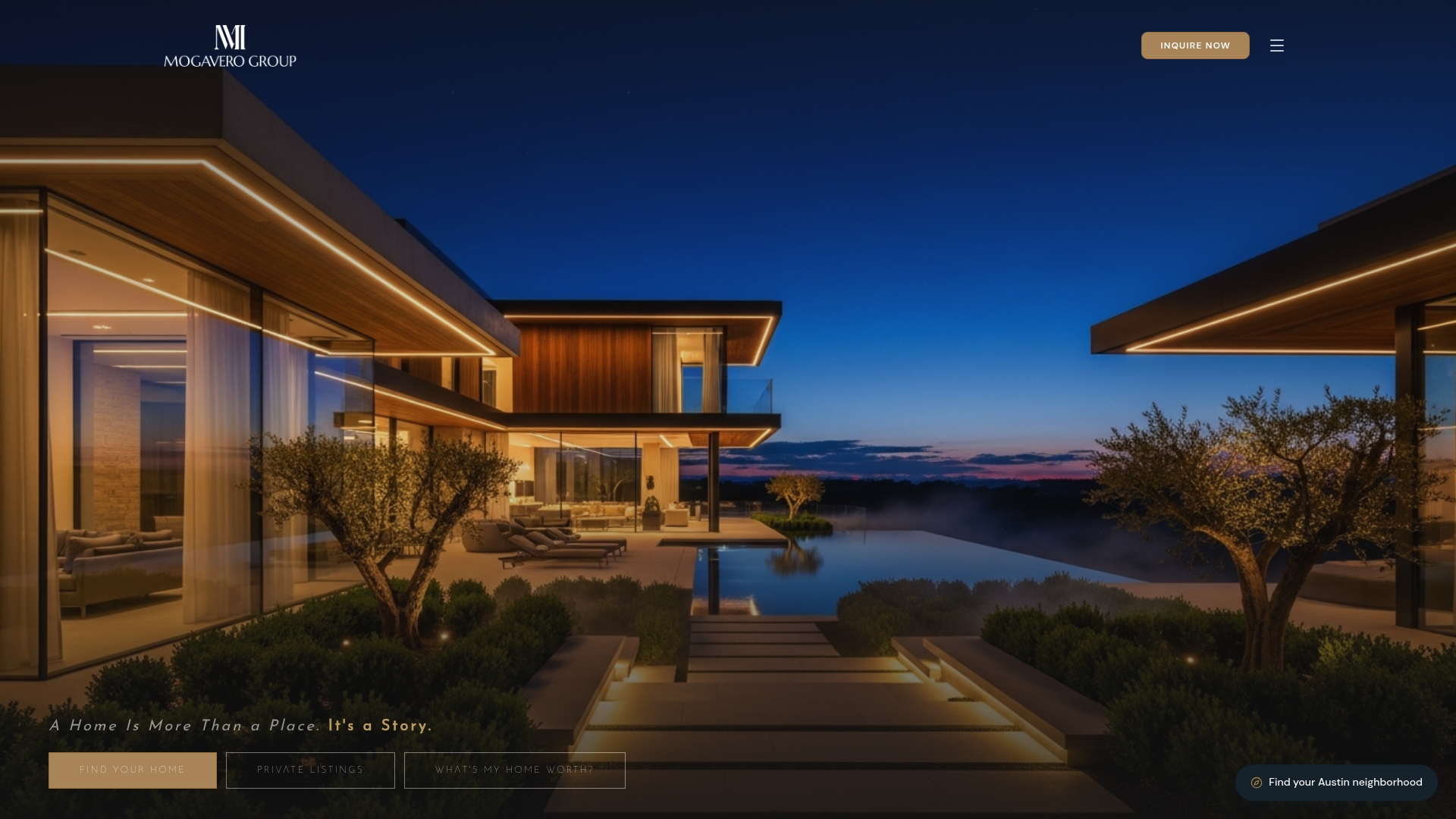
Buyer representation with an experienced local team can pair private access with market knowledge and architectural insight that helps evaluate construction quality, lot positioning, and resale potential, details that matter more in a phased, decades-old master-planned community than in a typical subdivision. If you’re weighing Steiner Ranch against other hill country or lake-adjacent neighborhoods, that same architectural lens applies across Lake Austin and other nearby areas worth comparing.
Reach out through Buyer Representation to start a tailored search that includes both public listings and private inventory, before the next Steiner Ranch home you love disappears from the market.
Sources
- Steiner Ranch Master Association
- U.S. Census Bureau QuickFacts: Steiner Ranch CDP, Texas
- Steiner Ranch Elementary School
- Vandegrift High School
FAQ
Is Steiner Ranch a Good Place to Live?
Steiner Ranch works well for families and outdoor-oriented buyers who prioritize amenities, schools, and lake access over a short commute. It’s a strong fit if you can absorb the higher price point and don’t need to be downtown daily.
What Part of Austin Should You Stay Away From?
This varies block by block rather than by broad district, and Steiner Ranch itself ranks among the lower-crime residential areas in the region. Check current crime data through the Austin Police Department or Travis County Sheriff’s Office for any specific street before buying anywhere in the metro.
How Many People Live in Steiner Ranch, Austin?
Population figures for the Steiner Ranch CDP run into the tens of thousands, according to U.S. Census Bureau QuickFacts. The community continues to grow as remaining phases finish construction.
What Is Steiner Ranch Known For?
Steiner Ranch is known for its resident-only Lake Club on Lake Austin, extensive trail system near the Balcones Canyonlands Preserve, and strong Leander ISD school zoning. It’s the combination of hill country scenery and master-planned amenities that draws most buyers.
How Do I Find Off-Market Homes in Steiner Ranch?
Off-market and pre-construction homes in Steiner Ranch typically move through private networks rather than public listing sites. Private Listing Access through Mogavero Group connects buyers to that inventory before it’s publicly available.